Thursday, April 5, 2012

Eleven Reasons Why the Christian Claim that Jesus Rose Bodily from the Dead Is Rational and Credible

I have taken my summary in the notes below in part from Mark Driscoll and Gary Breshears, Doctrine: What Christians Should Know and Believe (Wheaton, Ill.: Crossway, 2010), 287-96; Steven T. Davis, Risen Indeed: Making Sense of the Resurrection (Grand Rapids, Mich.: Eerdmans, 1993), 180-85; Paul Beasley-Murray, The Message of the Resurrection (Downers Grove, Ill.: Inter-Varsity, 2000), 246-55); John R. Frame, Apologetics to the Glory of God (Phillipsburg, N.J., Presbyterian & Reformed, 1994), 143-47; and William Lane Craig, Apologetics: An Introduction (Chicago, Ill.: Moody, 1984), 167-206.  There are, of course, many more than just 11 reasons why we can say belief in the bodily resurrection of Jesus is credible and rational, and these works offer many such other reasons. 


1. The best explanation for the radical transformation of the disciples of Jesus from a fearful band of followers who largely abandoned Jesus in his hour of greatest need into to a group of bold spiritual warriors who would risk their lives for the cause of the gospel and thereby turn the world upside down (Acts 17:6) is that they had encountered the resurrected Jesus Christ.


2. Jesus’ tomb was empty.  When the disciples began to proclaim that Jesus had risen from the dead, their claims would have earned no reception at all if the body of Jesus still lay in the grave in a location widely known.  In other words, if the tomb of Jesus were not empty, everyone would have dismissed out of hand the resurrection claims of the early church.  The truth is that we have no record of anyone ever challenging the disciples’ claim of an empty tomb.


3. The Bible records that hundreds of people were eyewitnesses to the bodily resurrection of Jesus, including a group of more than 500 people at one time (1 Corinthians 15:4-8).  Some critics have charged that the disciples were hallucinating when they saw Jesus risen from the dead, but we have no account from history of more than 500 people experiencing the same hallucination at the same time. 


4. What is more, there is no indication from Scripture or history that the disciples and other witnesses to the bodily resurrection of Jesus were liars or lunatics.  To the contrary, the Gospels show every indication of being careful and truthful accounts of the life of Jesus compiled from the eyewitnesses.


5. The Gospels testify that it was women who were the first to find the tomb of Jesus empty that Sunday morning (Luke 24:1-8), and it was a woman, Mary Magdalene, to whom the resurrected Jesus first appeared (John 20:11-18).  In the Jewish world of Jesus’ day, the testimony of women was considered so inherently unreliable, it was inadmissible in court.  Therefore, the only reason why, in Jesus’ world, the Bible would record that women were the first witnesses to the empty tomb and resurrection was that women in fact were the first witnesses to the empty tomb and the resurrection.


6. It is impossible to account for the origin of the Christian church apart from the bodily resurrection of Jesus from the dead.  The claim that Jesus was the risen Lord lay at the heart of early Christian preaching (e.g., Acts 2:24-32; 17:31; etc.), and the early Christians risked their lives for the claim that the tomb was empty and Jesus had risen bodily from the dead. 


7. The Gospels testify that the disciples and other early Christians were astounded by the bodily resurrection of Jesus and initially doubted that it had occurred (e.g., Luke 24:10-12; John 20:8-10, 24-25), even though Christ had informed them specifically at least three times before his crucifixion that he would die and rise again on the third day after death (Mark 8:31; 9:30-31; 10:32-34).  In addition, there was no widespread expectation within Judaism in the 1st century A.D. that the Messiah would rise from the dead.  Because the followers of Jesus were not expecting him to rise bodily, the only way to account for their subsequent bold testimony of Christ’s bodily resurrection was that they in fact had been eyewitnesses to that resurrection. 


8. The Gospels have shown themselves to be historically reliable,[1] and there is no good reason to doubt the historicity of their accounts of the resurrection of Jesus.    


9. The early church stopped worshiping the Lord on Saturday, the Jewish Sabbath, and began to worship on Sunday instead (Acts 20:7; 1 Corinthians 16:1-2; Revelation 1:10).  There must have been a monumental event that occurred on a Sunday that would cause the early Christians to shift their belief about the correct day for Sabbath worship in the Fourth Commandment (Exodus 20:8-11), and the best explanation for that shift is that the early church worshipped the Lord on Sunday in commemoration of the bodily resurrection of Jesus on Sunday.


10.  It is difficult in the extreme to account for the reality that billions of Christians for the last 2,000 years have affirmed as fundamental their belief in the bodily resurrection of Jesus (1 Corinthians 15:4) unless that event actually occurred in time and space.  


11. Jesus’ own earthly family originally doubted his claims to be the Messiah (John 7:1-5; Mark 3:20-21), yet after the resurrection of Jesus, Mary and Jesus’ half-brothers had joined with the early Christians (Acts 1:14).  It is hard to explain this transformation of the family of Jesus apart from a personal experience by them of the bodily resurrection of their son and half-brother. 


[1] On the historical reliability of the four Gospels, see F.F. Bruce, The New Testament Documents: Are They Reliable?, 6th ed. (Downers Grove, Ill.: Inter-Varsity, 1981); and Craig Blomberg, The Historical Reliability of the Gospels (Downers Grove, Ill.: Inter-Varsity, 1987).

Monday, April 2, 2012

A Few Preliminary Thoughts on the Trayvon Martin Case

The shooting of 17-year old African American Trayvon Martin last month by a 28-year-old Hispanic man named George Zimmerman reminds Americans that racial tension today tends to boil just underneath the surface of our society, and a single event can cause those tensions to erupt out in the open.  Today’s New York Times leads with an article whose headline summarizes well the growing anger that African Americans and others are expressing in the wake of the February 26 tragedy: “Race, Tragedy, and Outrage Collide After a Shot in Florida” (www.nytimes.com).


How are Christians of all races to respond to the terrible events of February 26?  There is so much that could and should be said in answer to this question, but allow me to offer just a couple of potential answers.


1)      On the one hand, Christians must avoid a rush to judge the motives of George Zimmerman.  The fact is we simply do not know yet whether Zimmerman acted to harm Trayvon Martin, who was unarmed, because he was racially profiling the teenager.  We do know that Zimmerman wanted to be a policeman and a judge, and so he may have acted out of a deeply sinful desire to impress local police officials with his toughness.  At this point we the public cannot say exactly what was in the mind of George Zimmerman.


2)      On the other hand, it is abundantly clear that Zimmerman violated the rules of the neighborhood watch program of which he was a part, and it seems apparent he also used excessive force in his encounter with Trayvon Martin.  Even if we assume that Martin was a genuine threat to Zimmerman, the Bible contains a principle that in matters of self defense, we may use only that amount of force that is reasonably necessary under the circumstances (Exodus 22:2-3).  This biblical principle is also written into American criminal law.  It is hard to avoid the conclusion, based on the facts we do know about the events of February 26, that George Zimmerman did not violate the biblical principle against use of excessive force.       


3)      And even though we do not yet know the motive in the mind of George Zimmerman, and even though there are politicians and other leaders who would shamelessly exploit this tragedy for personal gain, the case nevertheless gives those of us who are not African American an important chance to think about what it is like to live in the United States as an African American male.  I have read through the years, for example, of African American men who served in the upper echelons of corporate American or our universities, who were refused rides in taxis at night simply because of the color of their skin.  Many African American men report that society regularly profiles them, presuming that they are threat when they are nothing of the sort.  All of us need to think how we would feel to be under regular suspicion, not because of who were are but simply because of how we look.  All of us also need to be the kind of people who, like the Lord himself, seek to look at other people based not “on the outward appearance” but “on the heart” (1 Samuel 16:7).   

Thursday, March 22, 2012

Some Thoughts for Teenagers-- and All the Rest of Us-- on Trusting God

                Why does the Bible command Christians to trust in the Lord with all our hearts?  (Proverbs 3:5).  That command means the Lord wants you to trust totally the goodness of his plan for your future marriage (or future singleness).  He wants you to trust totally the wisdom of his plan for where you should go to college.  He wants you to trust totally the love of his plan, set out in Scripture, for the way you use your body and your mind.


                We might ask, however, why the Lord is worthy of such absolute trust as Proverbs 3:5 describes.  After all, none of the human begins around us are trustworthy all the time.  Our friends lie to us, and even our parents fail us from time to time.  What makes the Lord so different from human begins?


                The answer is that just about everything about the Lord makes him different from human beings.  You can trust God with all your heart because unlike human beings, he knows all things perfectly, including all future things (Job 37:16; 1 John 3:20; Isaiah 44:6-8), and he will thus never lack the information necessary to make the best possible plans for your life.  You can trust God with all your heart because he loves you with infinite and perfect love (John 17:23), as most clearly seen in the death of Jesus Christ the Son on the cross for your sins (1 John 3:16).  If God’s love for you is so great that he did not spare even his beloved Son for your sake, then surely you can trust the Lord to give you everything else you really need (Romans 8:32).  Moreover, you can trust God with all your heart because he is good (Psalm 136:1), and all his plans for your life are therefore “good and acceptable and prefect” (Romans 12:2).  Finally, you can trust God with all your heart because he has all power to carry out his sovereign will for your life (Genesis 18:17; Jeremiah 32:17; Romans 11:36), and no one will ever be able to thwart his good and loving plans for you (Daniel 4:35).


                Think about where in your life right now you are wavering in trusting God.  Are you failing to trust him for some future supply of wisdom you know you need, or do you fear he will fail you when it comes to providing for your financial needs in the future?  Consider that in order for God to break your trust, he would, in the words of one of my seminary professors, have to de-God himself!  And the Lord cannot ever de-God himself.  He cannot fail you.  So like the father at the foot of the mountain of Transfiguration, ask the Lord to build your trust in him.  Say with that father to the Lord, “I believe; help my unbelief!” (Mark 9:24).    


Thursday, March 15, 2012

Some Reflections on the Biblical Virtue of Humility

Isaiah 66:2b (ESV): “But this is the one to whom I will look:

he who is humble and contrite in spirit and trembles at my word.”


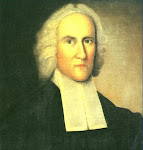
Jonathan Edwards, dairy entry for March 2, 1723: “How much better do I feel when I am truly humbling myself, than when I am pleasing myself with my own perfections!  Oh how much pleasanter is humility than pride!  O that God would fill me with exceeding great humility, and that he would ever more keep me from all pride!  The pleasures of humility are really the most refined, inward, and exquisite delights in the world.”  Excerpt from The Works of Jonathan Edwards, reprinted ed. (Carlisle, Penn.: Banner of Truth, 1990), 1: xxvii. 


A. proposed definition for humility: “honestly assessing ourselves in light of God’s holiness and our sinfulness.” C.J. Mahaney, Humility: True Greatness (Sisters, Oreg.: Multnomah, 2005), 22.


B. how to seek to grow in humility, by the grace of God

1. Take the gospel deeply into your soul, for that good news reminds us 1) that we are Christians by the grace of God alone (Ephesians 2:8-9); 2) that any natural or spiritual talent or blessing we possess is ours by the grace of God (1 Corinthians 4:7); and 3) that our position in the world is also ours by the grace of God (1 Corinthians 15:10).

2. Meditate daily on the humility Jesus displayed in his life (e.g., John 13:1-11).

3. Meditate daily on the massive reality that Jesus Christ, though he was the eternal Son of God, “humbled himself by becoming obedient to the point of death, even death on a cross” (Philippians 2:8).

4. Tremble at the word of God (Isaiah 66:2b).

5. “Begin your day by acknowledging your dependence upon God and your need for God.” (Numbers 5-10 herein are taken from Mahaney, Humility, 171-72.)

6. “Study the attributes of God.”

7. “Laugh often, and laugh at yourself.”

8. “Identify evidences of grace in others.”

9. “Encourage and serve others each and every day.”

10. “Play golf as much as possible.”


Monday, March 12, 2012

The Glorious Gospel of a Happy God


                The good news that is the Christian gospel includes the good news that the God of the Bible is an eternally and infinitely happy God.  That is not to say God is happy with everything that goes on in the universe he created.  After, by our sin we disciples of Jesus grieve the heart of God (Ephesians 4:30).  The Lord certainly does not enjoy either sin or the effects of sin in the world, like illness, brokenness, and death.  What the Lord does delight in, eternally and infinitely, is himself.  Within the Godhead, the Father has delighted from all eternity in the Son and the Spirit; the Son has delighted from all eternity in the Father and the Spirit; and the Spirit has delighted from all eternity in the Father and the Son.  We catch just a glimpse of this intratrinitarian delight in the baptism and Transfiguration of Jesus, at both of which occasions the Father spoke from heaven and said, “This is my beloved Son, with whom I am well pleased” (Matthew 3:17; 17:5).  Luke 10:21 also reports that Jesus the Son “rejoiced in the Holy Spirit” over the plan of the Father for his earthly ministry.

                Jonathan Edwards, the great early American pastor and writer, summed up this intratrinitarian delight in “An Unpublished Essay on the Trinity” in these words: “It is common when speaking of the Divine happiness to say that God is infinitely happy in the enjoyment of Himself, in perfectly beholding and infinitely loving, and rejoicing in, His own essence and perfection.”  Contemporary Christian writer and Pastor John Piper insightfully adds:


No one would want to spend eternity with an unhappy God.  If God is unhappy then the goal of the gospel is not a happy goal, and that means it would be no gospel at all.  But, in fact, Jesus invites us to spend eternity with a happy God when he says, “Enter into the joy of your master” (Matthew 25:23).  Jesus lived and died that his joy-- God’s joy—might be in us and our joy might be full (John 15:11; 17:13).  Therefore the gospel is “the gospel of the glory of the happy God [1 Timothy 1:11].


(John Piper, The Pleasures of God, revised ed. (Sisters, Oreg.: Multnomah, 2006), 26, emphasis in original).  The gospel is good news, among many other reasons, because it is the news of how in Jesus Christ, sinful human beings can come into right relationship with the God who is infinitely and eternally happy!  

Thursday, March 8, 2012

The Grace of God in the Life of Boaz


                Reading the biblical Book of Judges can sometimes be more than a little bit discouraging.  The Lord had faithfully brought his people the Jews into the Promised Land, just as he said he would do.  However, consistently during the approximately 325 years the judges led the people of Israel, the Jews turned away from the Lord again and again and again.  Though they had witnessed incredible miracles Yahweh had performed on their behalves, the people of God turned away from the Lord to the worship of the false gods worshiped by the people groups around them.  The refrain that closes the Book of Judges sums up the seriously tragic spiritual declension of the day: “Everyone did what was right in his own eyes” (Judges 21:25; cf. Judges 17:6; 18:1; and 19:1).


                The last five chapters of the book of Judges show especially clearly an Israel that has fallen into spiritual and moral degradation of the basest kinds.  The land is full of violence, disrespect for women, sexual immorality, and abuse of neighbor.  We wonder whether there was any Israelite at all living in the day of the judges who was full of the grace of God and of noble character.  The we turn to the pages of the short Book of Ruth, which introduce us to a Jewish man by the name of Boaz.  This man does prove to be full of the grace of God, manifested in his exercise of steadfast love toward his workers and toward his extended family.  Boaz’s love for the Lord and utter integrity and faithfulness toward his workers and family shine through in this book, and they shine especially righty when we see that Boaz lived during the otherwise degraded time of the judges (Ruth 1:1). 


                There is even more to Boaz, however, than his godly character.  The Book of Ruth stresses that Boaz is the kinsman-redeemer of Ruth, the woman of Moab who has been converted to the worship of the Lord (Ruth 3-4).  As Ruth’s kinsman-redeemer, Boaz purchases Ruth, by payment of a ransom price, out of difficult circumstances into a situation of blessing.  In this respect Boaz foreshadows his direct descendant (Matthew 1:3-6) Jesus Christ who would be the great Kinsman-Redeemer.  Jesus became our kinsman by becoming a real human being—God the Son became one of us! (John 1:14).  Christ redeemed sinners by dying to pay the penalty for their sins on the cross of Calvary (Romans 3:21-26), so that whoever trusts in Jesus alone for salvation has eternal life (John 3:16).  Jesus did not redeem his people’s souls through payment of money, as Boaz redeemed Ruth, but he paid our ransom price to the father with his own infinitely precious blood (Mark 10:45; 1 Peter 1:19).


                The other morning after I had re-read the story of Boaz from the Book of Ruth, I prayed that God in his grace would make me a man of noble character—of steadfast love and faithfulness—like Boaz.  However, I also pray with thanksgiving that Boaz points to an infinitely greater Kinsman-Redeemer, Jesus Christ, who shed his blood on the cross to obtain an eternal redemption for the people of God.  “Thanks be to God for his inexpressible gift!” (2 Corinthians 9:15).

Monday, March 5, 2012

A Word about the 2012 Elections from the Book of Judges


                Old Testament scholars believe that the Book of Judges may have been written, under the inspiration of the Holy Spirit, around the time of King David.  The reason they draw this conclusion is that the Book of Judges seems in some ways to be an apologetic for the establishment of the Israelite kingship.  Scholars see this apologetic in the last sentence of the book: “In those days there was no king in Israel.  Everyone did what was right in his own eyes” (Judges 21:25).  Similar statements are made by the inspired writer in Judges 17:6; 18:1, and 19:1.  The idea seems to be that the time of the judges was a period of such great evil in Israel because there was not a righteous king like David ruling over the people and leading them to follow the Lord. 


                That certainly seems to be part of the reading of Judges 21:25.  But surely there is more to this verse.  Surely the inspired writer means not only that Israel declined into great evil because it lacked a human king, but even more the point of Judges 21:25 is that at the time of the judges, the Jewish people were not serving the Lord as their ultimate King.  To be sure God was still ruling over his people; no human action can dispossess God of his universal supremacy.  However, the Israelites at the time of the judges were living in practical ways as if the Lord were not the supreme King of their nation.  Because the people were living as if God really were not their ultimate King, the Book of Judges is for the most part a discouraging account of serious spiritual decline and the violence and degradation that flow from such decline.


                Here is where I think Judges 21:25 speaks to American Christians in an election year.  On the one hand, it is right that we should pray every day that God in his mercy would raise up to political leadership in our land men and women who love righteousness and justice.  We desperately need leaders full of God’s love and biblical wisdom.  At a deeper level, however, Christians need to pray that Americans would recognize that the God of the Bible is our supreme King—and to live under that reality.  Even more than godly leaders, the United States needs the Lord himself to come with reviving mercies, beginning with a spiritual cleansing of the church and moving outward from there.  Until the day Americans recognize God as our supreme King, the men and women of this country will continue simply to do what is right in their own eyes.  As the Book of Judges demonstrates, doing right in our own eyes can only lead to violence, degradation, and destruction.